When people begin red light therapy, they often approach it with intensity.
Long sessions.
Daily exposure.
Multiple devices combined.
The assumption feels logical: more light should accelerate results. But photobiomodulation does not reward intensity. It rewards structure. If there is one principle that determines whether red light therapy delivers sustainable outcomes, it is this: Consistency matters more than intensity.
What Is Photobiomodulation and How Does It Work?
Red light therapy — scientifically referred to as photobiomodulation (PBM) — works by delivering specific wavelengths of red and near-infrared light that interact with mitochondrial chromophores, particularly cytochrome c oxidase.
This interaction influences:
- ATP production
- Reactive oxygen species signaling
- Nitric oxide dissociation
- Cellular repair pathways
Unlike stimulants or acute performance interventions, photobiomodulation functions as a biological signal. Signals require repetition to produce adaptation.
References:
- Mechanisms and applications of the anti-inflammatory effects of photobiomodulation (Hamblin)
- Photobiomodulation and mitochondrial metabolism
This distinction changes how red light therapy should be used.

The Biphasic Dose Response: Why More Light Is Not Better
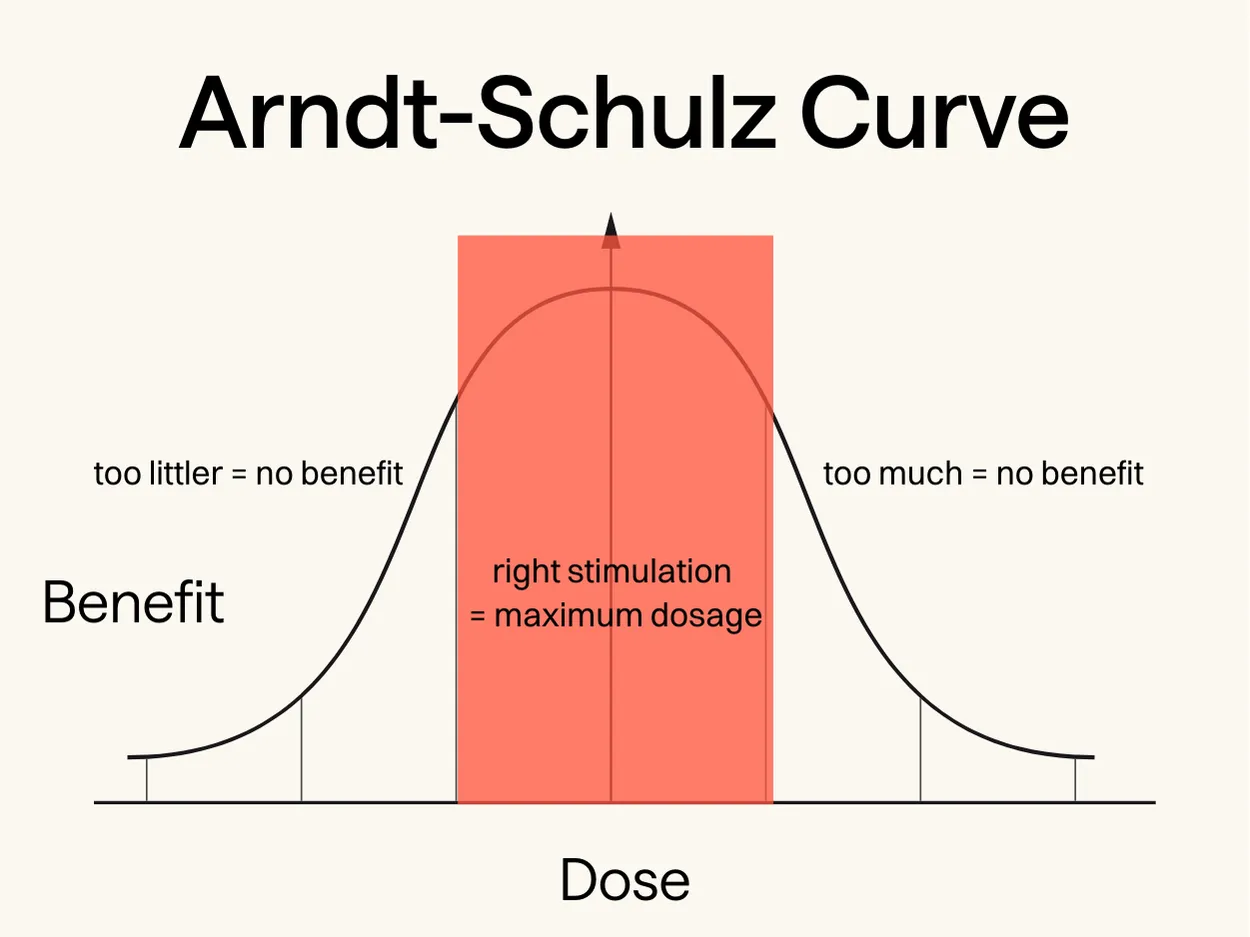
One of the most important scientific principles in red light therapy is the biphasic dose response, also known as the Arndt-Schulz law.
Research shows that:
- Insufficient light exposure produces minimal biological response.
- Excessive light exposure can reduce therapeutic benefit.
Optimal results occur within a defined dose window.
References:
- Biphasic dose response in low level light therapy
- A review of low level laser therapy / photobiomodulation dose response
This means that increasing session length or frequency beyond optimal parameters does not necessarily improve results — and may in some cases reduce effectiveness.
The goal is not maximum exposure.
The goal is correct exposure, repeated consistently.
See how red light supports your goals - explore the product benefits now.
How Often Should You Use Red Light Therapy?
One of the most common questions is: How often should I use red light therapy?
The answer depends on several variables:
- Wavelength
- Power density (irradiance)
- Distance from the device
- Treatment area
- Intended application
Most structured red light therapy routines recommend consistent sessions multiple times per week rather than sporadic high-intensity exposure. Daily use is not automatically superior. Within the biphasic response framework, recovery time between sessions can support adaptation.
This is why structured guidance matters more than self-experimentation.
Why Consistency Produces Better Results
Mitochondrial adaptation unfolds gradually. When light stimulates cytochrome c oxidase, downstream processes influence gene expression, oxidative balance, and tissue response. These changes accumulate over time.
Studies in dermatological, musculoskeletal, and neurological contexts consistently demonstrate cumulative improvements with repeated exposure rather than isolated sessions.
References:
Users often ask: “How quickly will I see results?” A more useful question is: “How consistently can I maintain the signal?” Red light therapy results typically emerge over weeks, not days. Energy perception, skin quality, recovery experience, and overall resilience tend to improve progressively when sessions are structured and repeatable.
Consistency builds biological momentum.
The Psychological Trap of Intensity
Intensity feels productive. In modern health culture, longer sessions and higher output are often associated with commitment. But photobiomodulation is not a high-stress intervention. It is closer to metabolic signaling than to exertion. This distinction becomes particularly important in the context of female aging.
Red Light Therapy and Female Aging
Longevity discourse is shifting.
Female aging — including ovarian aging, mitochondrial decline, and perimenopausal energy changes — is increasingly recognized as a central variable in systemic aging. The launch of the XPRIZE focused on ovarian aging marks a structural shift in how the field views reproductive biology: not as an isolated fertility issue, but as a longevity driver.
References:
While research in photobiomodulation for female reproductive health is still evolving, mitochondrial modulation plays a well-documented role in cellular aging processes. This reinforces a broader principle: Infrastructure-based interventions — repeatable, non-pharmaceutical, biologically grounded — are becoming more strategically relevant.
Consistency is not just behavioral discipline. It is physiological alignment.
From Device Thinking to Protocol Thinking
The red light therapy market has matured rapidly.
Many devices share similar wavelength ranges and output claims. Hardware alone is no longer a durable differentiator. What determines outcome quality is structured usage.
Protocol thinking asks:
- Is session duration defined?
- Is frequency structured?
- Is there progression logic?
- Is the routine sustainable?
At Luminous Labs, our ecosystem — including:
What a Structured Red Light Therapy Routine Looks Like
A sustainable photobiomodulation routine generally includes:
- Defined session duration appropriate to device output
- Targeted application zones
- Consistent weekly rhythm
- Reassessment after 4–8 weeks
It does not require constant escalation. It requires adherence. Users who treat red light therapy as infrastructure — integrated into daily rhythm — tend to see more durable outcomes than those who approach it episodically.
Start Simple
If you are new to red light therapy: Begin with one area. Choose a realistic frequency. Maintain it consistently for several weeks. Only adjust after adaptation stabilizes. The goal is not to maximize exposure. The goal is to optimize signaling. Consistency creates clarity. Clarity creates measurable progress.
Explore Structured Red Light Therapy
If you are unsure which device fits your routine, explore our structured ecosystem here. Or begin with guided content in our "Start" Story Highlight on Instagram.