What hotel and spa operators need to know about integrating PBM as a premium amenity — protocols, guest experience, and ROI. A practical guide by Redgevity Master.
Somewhere in the last two years, a shift happened. The guests walking into your hotel or spa started to know what photobiomodulation is. They have red light panels at home. They have listened to the podcasts. They understand the difference between red and near-infrared wavelengths. And when they arrive at a premium property, they are beginning to ask - quietly, then more loudly . whether you offer it.
For operators, this represents both an opportunity and a risk. The opportunity is clear: PBM is a scientifically mature modality with a rapidly growing audience and strong guest retention data. The risk is less discussed but equally real -. and it is this: buying the wrong kind of solution for your space.
This guide is written for hospitality operators who are evaluating PBM seriously. Not for those exploring it as a curiosity, but for those who want to integrate it properly, protect the guest experience, and make a decision they will not need to revisit in twelve months.
1. The Demand Signal Has Already Arrived
The longevity and biohacking market is no longer niche. By 2025, the global wellness economy had surpassed $6 trillion, with recovery and light-based therapies among the fastest-growing subcategories. More importantly, the demographic driving this growth - educated, health-conscious, high-spending - is precisely the demographic most premium hotels and spas are already serving.
This is not speculative. These guests are already booking with your competitors who offer PBM treatments. They are already comparing properties based on whether a serious recovery or longevity protocol is available. And they are willing to pay meaningfully more, and return more often, for properties that take this seriously.
The question for most operators is no longer whether to add PBM. It is how, and that is where the real decision becomes consequential.
2. What Guests Who Know PBM Actually Expect
A guest who uses red light therapy at home has developed an intuition for what a good session looks like. They know the difference between a device that is simply powered on and a session that is actually dosed correctly. When they walk into your facility, they will immediately notice several things:
- Whether there is a clear protocol - or whether they are left to figure it out themselves
- Whether the device is positioned for their goal - or whether it is a generic wellness prop
- Whether staff can answer basic questions - or whether they are improvising
- Whether the experience feels designed - or like an afterthought
A guest who does not know PBM is also forming an impression - but it is an impression of your brand, not of the technology. Both matter. Both are shaped by the same fundamental question: is this experience guided, or is it hardware sitting in a room?

3. The Problem with Hardware-Only Solutions
The majority of PBM devices currently sold into the hospitality sector are sold as hardware. A device is installed. A laminated instruction sheet is placed beside it. Staff receive a thirty-minute briefing. The operator considers the integration complete.
What follows is predictable. Staff explanation time per session climbs. Guest confidence varies dramatically based on which team member is on duty. Protocols drift across shifts. Reviews mention the device but not the experience. And utilisation rates plateau at a fraction of what the investment could support.
This is not a problem unique to PBM. It is a problem that emerges whenever sophisticated technology is deployed without the operational infrastructure to support it. The hardware works. The experience fails. And in hospitality, the experience is the product.
Hardware-only solutions also create a secondary problem: they put your staff in an impossible position. A wellness attendant is not a photobiomodulation clinician. Expecting them to guide individualised sessions without a structured system is unfair to staff and inconsistent for guests.
4. What a Platform Approach Changes
The alternative is to treat PBM not as a device purchase but as a guest experience platform. This distinction changes the operational reality entirely.
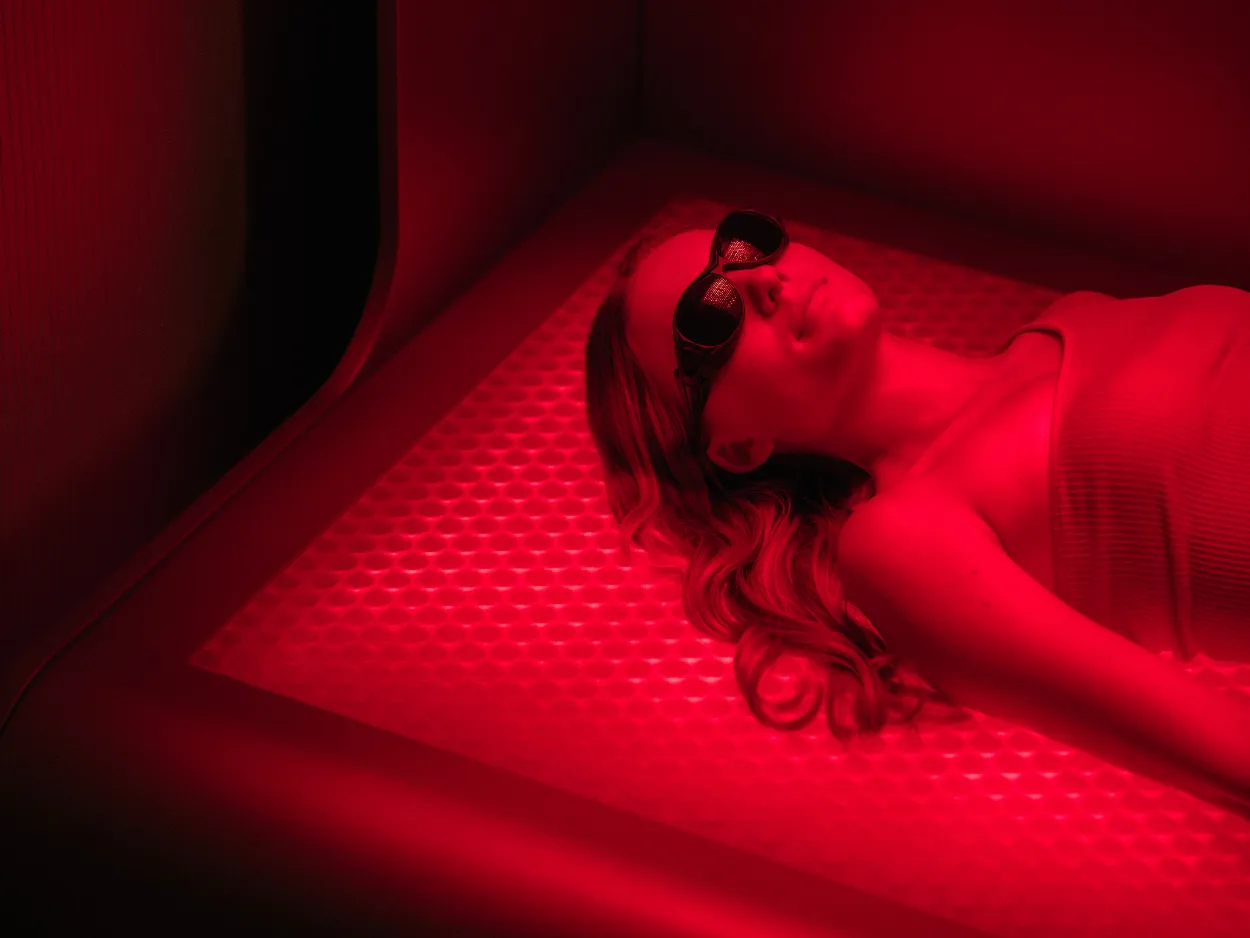
A platform approach means the session is guided from the moment the guest sits down. They are presented with a clear choice of goals - recovery, skin, energy, sleep . rather than a wavelength selector they do not understand. The system selects the appropriate protocol. Duration, intensity, and positioning are built in. The guest receives a consistent, expert-level experience without requiring expert-level staff supervision.
For operators, this translates into three measurable operational advantages:
- Staff-light operation. Sessions run consistently without requiring specialist supervision. Your team can be present and attentive rather than technically responsible.
- Consistent outcomes. Every guest, regardless of which team member is on duty or which session it is, receives the same protocol quality. This is what drives repeat bookings and positive reviews.
- Remote monitoring and updates. IoT connectivity means the platform can be supported and updated without on-site technical visits. Program improvements and new protocols can be deployed centrally.
5. The ROI Case for Hospitality
Operators evaluating PBM typically approach the ROI question in one of two ways: treatment revenue or brand differentiation. Both are valid. Neither is the full picture.
On the revenue side, PBM sessions in premium environments typically command between EUR 40 and EUR 120 per session depending on protocol length, positioning, and market. With moderate utilisation - three to five sessions per day - the return on a quality platform investment is achievable within twelve to eighteen months.
The differentiation case is harder to model but arguably more durable. Properties that integrate PBM as a serious protocol, not a promotional item, attract a specific guest who researches their stays, spends more per visit, and returns at higher rates. This guest is also highly active in wellness communities and tends to generate organic referrals that marketing budgets cannot replicate.
There is also an internal ROI consideration that is often overlooked: staff time. A platform that requires minimal manual guidance frees your team to focus on the guest relationship rather than technical explanation. In high-occupancy environments, this is a meaningful operational advantage.
Leasing options, available through select platform providers, also allow operators to manage capital allocation more flexibly - accessing current-generation technology without the full purchase commitment.
See how red light supports your goals - explore the product benefits now.
6. What Integration Actually Looks Like
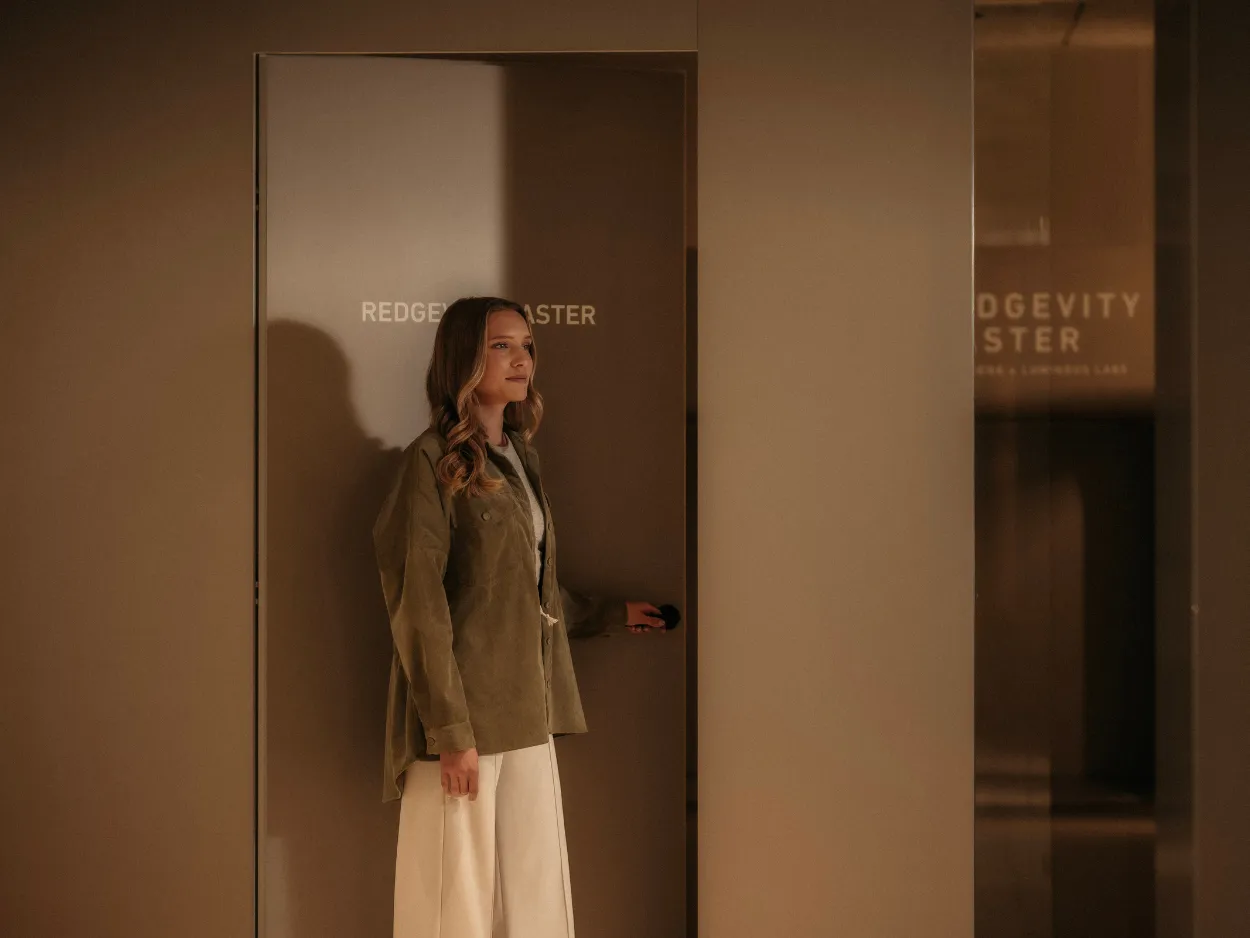
A well-executed PBM integration in a hotel or spa environment does not require a dedicated space the size of a treatment room, a specialist team, or a lengthy transition period. What it does require is clarity about the guest journey - from how PBM is presented at booking, to how it is introduced on property, to how the session is conducted, to how it is connected to the broader wellness offering.
The most successful integrations we have observed follow a consistent pattern. PBM is positioned as a protocol, not an add-on. It is connected to a guest outcome, recovery after sport, skin rejuvenation, improved sleep on a travel itinerary, rather than presented as a standalone technology. And it is supported by a system that guides the experience rather than relying on staff to improvise it.
Staff preparation is simpler than most operators expect. When the platform handles protocol selection and session guidance, the staff role shifts from technical expert to wellness host. Training time shortens significantly. Staff confidence, and therefore guest confidence, improves immediately.
The integration timeline, from decision to live sessions, typically ranges from four to eight weeks depending on the property configuration and any build-out requirements. For operators already running wellness programming, the transition is considerably simpler.
7. Questions Every Operator Should Ask Before They Buy
The PBM hardware market is growing quickly, and the range of options available to operators has expanded considerably. Not all of them are appropriate for hospitality settings. Before committing to a provider, any serious operator should be able to answer the following:
- Does the solution include a structured guest journey, or does it require staff to guide each session manually?
- Are the protocols designed by qualified professionals and appropriate for a non-clinical guest population?
- What does ongoing support look like, and does the provider have hospitality references?
- Can protocols be updated remotely as the science evolves, or is the system static at the point of purchase?
- Is purchase the only option, or is leasing available to manage capital allocation?
- Can you experience the platform at an operational partner location before committing?
Experience It Before You Decide
Redgevity Master is currently available at selected partner locations and Biogena Plazas. We invite hospitality operators to experience the platform in a live setting before making any investment decision.
To arrange a private partner walkthrough or request a consultation for your property, contact us directly at hello@luminouslabs.health.